
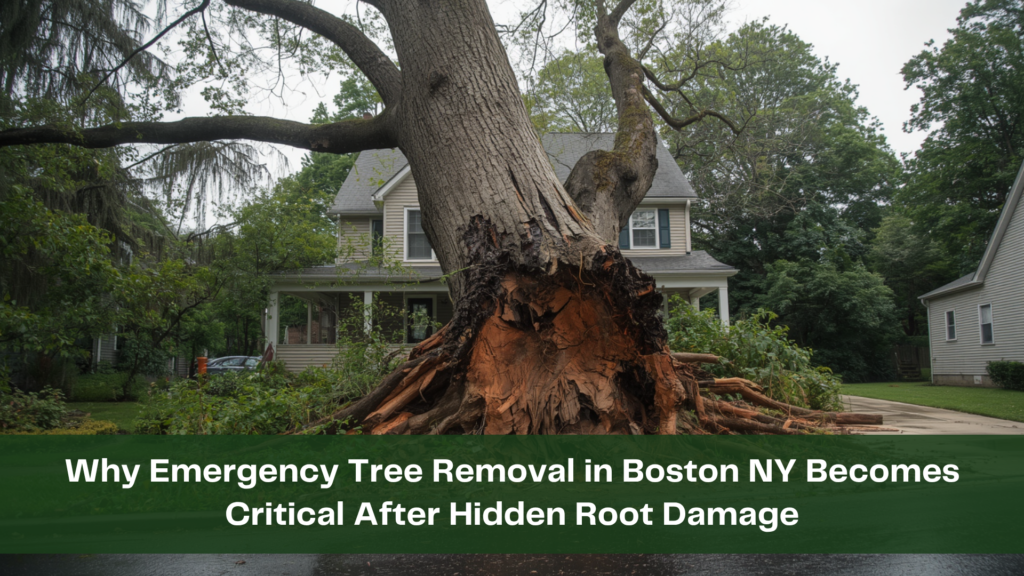
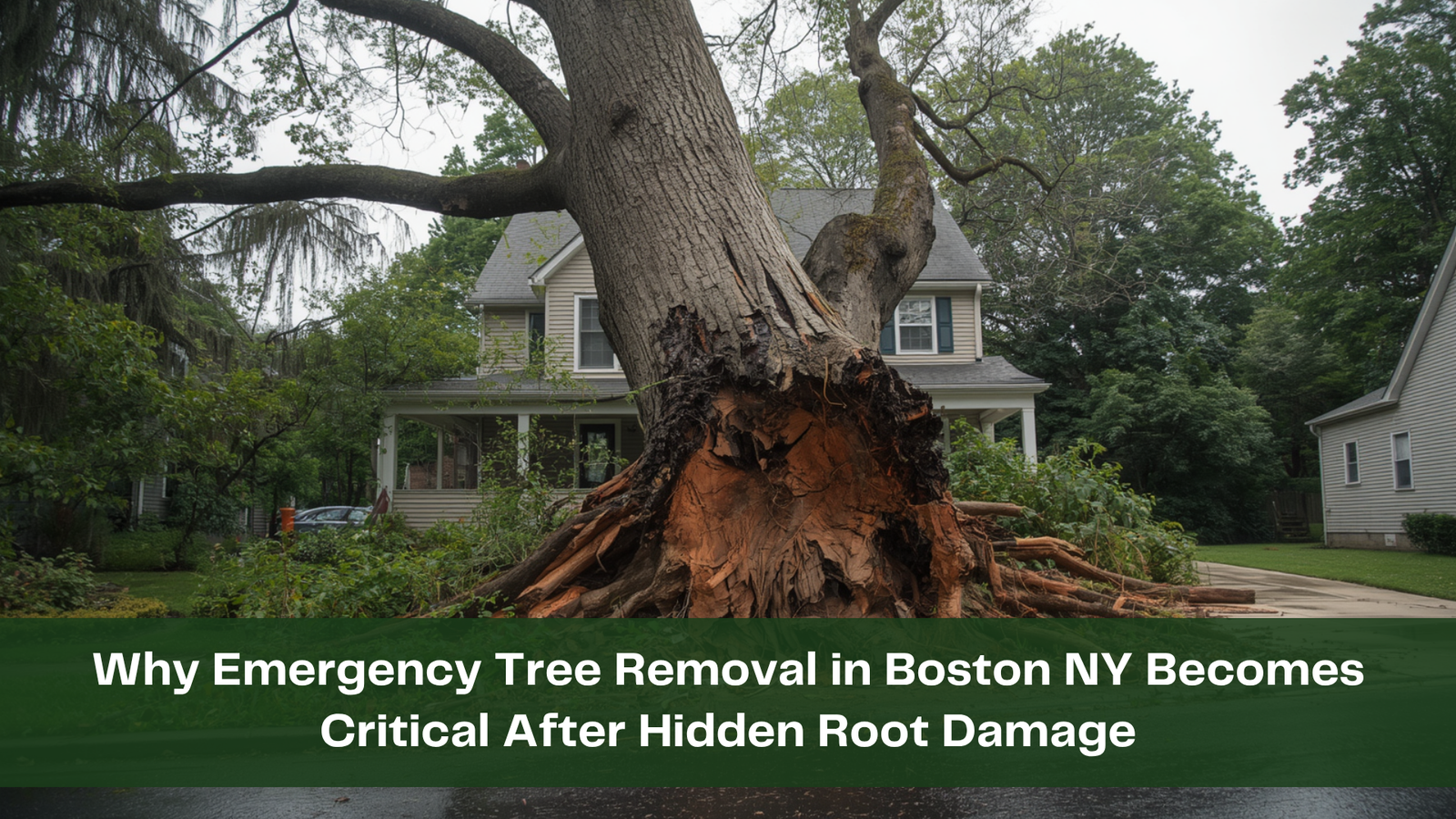
Most homeowners focus on what they can see above the ground when checking their trees. Broken limbs, leaning trunks, and dead branches are obvious warning signs. However, one of the most dangerous tree problems often develops underground where homeowners never notice it until a major emergency happens.
In Boston, NY, hidden root damage is a leading cause of sudden tree failures during storms, heavy rain, and strong winds. A tree may appear perfectly healthy on the outside while its root system is slowly weakening beneath the soil. When severe weather arrives, the tree can collapse without warning, creating an immediate need for emergency tree removal in Boston NY.
Properties near Boston State Road, Zimmerman Road, Back Creek Road, and Rice Road often contain mature trees that have grown for decades. While these large trees provide shade and curb appeal, aging root systems combined with soil changes can create serious hidden hazards for homeowners.
Understanding how root damage develops, why it becomes dangerous, and when emergency tree removal becomes necessary can help property owners avoid costly structural damage and dangerous accidents.
Why Tree Roots Matter More Than Most Homeowners Realize
A tree’s root system does far more than simply anchor it into the ground. Roots are responsible for:
- Stabilizing the tree during storms
- Absorbing water and nutrients
- Supporting trunk weight
- Preventing leaning and collapse
- Helping the tree resist wind pressure
When roots become damaged, the entire tree structure weakens. Even healthy-looking trees can suddenly uproot during heavy rain or strong winds.
Many emergency tree removal calls in Boston NY happen because homeowners never realized underground root problems existed until the tree failed unexpectedly.
Common Causes of Hidden Root Damage in Boston NY
Soil Saturation After Heavy Rain
Boston NY experiences seasonal storms that can oversaturate the ground. When soil becomes too wet, roots lose their grip and stability.
Large trees near low-lying areas around Back Creek Road are especially vulnerable because standing water weakens surrounding soil structure.
Over time, repeated saturation causes roots to decay and lose strength.
Construction and Excavation Damage
Home improvement projects often unintentionally damage tree roots.
Common causes include:
- Driveway expansion
- Sidewalk installation
- Utility trenching
- Fence installation
- Foundation work
Cutting major roots destabilizes the tree and reduces its ability to withstand storms.
A tree may survive for years after construction damage before suddenly collapsing during bad weather.
Compacted Soil
Heavy vehicles, construction equipment, and repeated foot traffic compress soil around trees. Compacted soil prevents roots from receiving enough oxygen and water.
This stress slowly weakens the root system underground.
Fungal Root Rot
Fungal diseases attack tree roots beneath the soil surface. Because the damage is hidden, homeowners often do not notice problems until the tree becomes unstable.
Root rot is especially common in older trees throughout wooded residential properties near Zimmerman Road and Herman Hill Road.
Natural Aging
As trees age, their root systems naturally weaken. Older trees may struggle to support large canopies during storms.
Even healthy mature trees can become emergency hazards when root systems deteriorate.
Signs of Hidden Root Damage
Although root problems occur underground, there are warning signs homeowners should watch for.
Sudden Leaning
If a tree begins leaning after a storm, the roots may already be failing.
Even slight movement can indicate major underground instability.
Soil Cracking Around the Base
Cracks or lifted soil near the trunk suggest shifting roots.
This often happens before complete uprooting occurs.
Dead Branches in the Upper Canopy
Root damage reduces nutrient flow throughout the tree. One early symptom is dieback in upper branches.
Fungal Growth Near the Base
Mushrooms or fungal growth around roots may indicate internal decay beneath the surface.
Exposed Roots
Erosion or shifting soil can expose roots, making them vulnerable to further damage.
Thinning Leaves
A weakened root system struggles to support healthy foliage growth.
If nearby trees appear healthy but one tree looks sparse or stressed, root problems may be developing.
Why Root-Damaged Trees Become Dangerous During Storms
Strong winds place enormous pressure on tree trunks and canopies. Healthy roots distribute that force throughout the soil. Damaged roots cannot provide the same support.
During storms in Boston NY, root-damaged trees often:
- Uproot entirely
- Split at the base
- Fall onto homes
- Collapse onto vehicles
- Block roadways
- Damage utility lines
Properties near Boston State Road frequently experience heavy wind exposure because of open surrounding areas.
When saturated soil combines with high winds, even large trees can fail within seconds.
Emergency Tree Removal After Root Failure
Once root failure occurs, immediate action is usually necessary.
Emergency tree removal professionals evaluate:
- Tree stability
- Structural damage
- Utility risks
- Nearby hazards
- Remaining root support
Some trees may require crane-assisted removal if they lean over homes or power lines.
Quick response is critical because partially uprooted trees can continue shifting long after storms end.
How Professional Arborists Detect Root Problems
Professional tree inspections help identify hidden root damage before emergencies happen.
Arborists look for:
- Trunk movement
- Soil instability
- Root flare abnormalities
- Canopy decline
- Fungal indicators
- Structural stress points
Advanced equipment may also help evaluate internal decay and underground conditions.
Routine inspections are especially important for older trees located close to homes and garages.
Why Delaying Removal Can Increase Property Damage
Some homeowners wait too long after noticing warning signs because the tree still appears alive.
However, unstable trees can fail suddenly without additional warning.
Delaying emergency removal may lead to:
- Roof destruction
- Broken windows
- Structural collapse
- Crushed vehicles
- Injuries
- Utility outages
A damaged tree leaning slightly today could completely collapse during the next storm.
Fast action helps minimize repair costs and safety risks.
The Importance of Preventative Tree Care
Preventative maintenance reduces the likelihood of emergency tree failures.
Regular Inspections
Annual inspections help identify root instability early.
Proper Drainage Management
Improving yard drainage prevents oversaturated soil conditions.
Avoiding Root Disturbance
Construction projects should avoid cutting major roots whenever possible.
Tree Pruning
Reducing canopy weight decreases stress on weakened roots.
Removing Hazardous Trees Early
If a tree becomes structurally unsafe, planned removal is safer and less expensive than emergency removal after collapse.
Why Boston NY Homeowners Face Increased Tree Risks
Boston NY properties often feature large mature hardwood trees that have grown for decades. While beautiful, these trees can become vulnerable due to:
- Harsh winter weather
- Seasonal storms
- Soil erosion
- Aging root systems
- Heavy snowfall
- Saturated spring soil
Homes near Rice Road and Zimmerman Road with wooded lots face especially high risks during storm season.
Regular tree evaluations are essential for protecting both homes and landscaping investments.
What Happens During Emergency Tree Removal
Emergency tree crews follow a careful process to remove hazardous trees safely.
Initial Hazard Assessment
The crew identifies immediate risks including:
- Electrical hazards
- Structural instability
- Unsafe branches
- Access limitations
Controlled Sectional Removal
Instead of cutting the entire tree at once, professionals often remove sections gradually to prevent additional damage.
Specialized Equipment Usage
Emergency removals may require:
- Cranes
- Bucket trucks
- Rigging systems
- Chainsaws
- Stump grinders
Property Cleanup
After removal, crews clear branches, logs, and debris to restore safe property access.
Choosing a Professional Emergency Tree Removal Company Boston Ny
Homeowners should choose experienced professionals equipped for hazardous situations.
Look for companies offering:
- Emergency response services
- Proper insurance
- Skilled crews
- Advanced equipment
- Safe removal methods
- Local storm experience
Reliable professionals understand the unique weather conditions and tree risks affecting Boston NY properties.
Final Thoughts
Hidden root damage is one of the most overlooked causes of dangerous tree failures in Boston NY. A tree that appears healthy can become a major hazard when underground roots weaken from storms, age, soil saturation, or construction damage.
For homeowners near Boston State Road, Back Creek Road, Zimmerman Road, and surrounding neighborhoods, understanding the warning signs of root instability is essential for preventing serious property damage.
Regular inspections, preventative maintenance, and fast emergency response can help protect homes, vehicles, and families from sudden tree collapses.
When root damage leads to unstable or fallen trees, professional emergency tree removal in Boston NY provides the safest solution for restoring property safety quickly and efficiently.
FAQs About Emergency Tree Removal in Boston NY
What are the signs that a tree needs emergency removal?
Some common warning signs include a suddenly leaning tree, cracked trunk, hanging branches, exposed roots, or trees touching power lines. If a storm-damaged tree looks unstable, homeowners in Boston NY should contact a professional emergency tree service immediately.
Can hidden root damage make a healthy tree fall?
Yes. A tree may appear healthy above ground while the root system is severely weakened underneath the soil. Root rot, soil erosion, and construction damage often lead to sudden tree collapse during storms.
Is emergency tree removal covered by homeowners insurance?
In many cases, insurance may cover emergency tree removal if the tree damages a home, garage, fence, or other insured structure. Coverage varies depending on the policy and cause of the damage.
Why do trees fall more often after heavy rain in Boston NY?
Heavy rain saturates the soil and weakens root stability. When strong winds follow storms, weakened roots may fail and cause trees to uproot unexpectedly.
Should I remove a leaning tree immediately?
A leaning tree can become dangerous quickly, especially after storms. Professional arborists can inspect the tree and determine whether emergency removal is necessary.
How quickly should storm-damaged trees be removed?
Hazardous trees should be removed as soon as possible to prevent additional property damage or injuries. Delaying removal can increase safety risks during future storms or high winds.
Can tree roots damage my property before the tree falls?
Yes. Large roots may damage sidewalks, driveways, foundations, underground pipes, and landscaping long before the tree becomes unstable.
What types of trees commonly fail during storms in Boston NY?
Older maple, ash, pine, and large hardwood trees are commonly affected during severe weather, especially if disease, decay, or root damage is already present.
Is DIY emergency tree removal safe?
No. Storm-damaged trees are highly unpredictable and dangerous. Attempting removal without professional equipment and training can lead to serious injuries, electrocution risks, or property damage.
How can homeowners prevent emergency tree situations?
Regular tree inspections, pruning, root protection, and removing diseased trees early can greatly reduce the chances of storm-related tree emergencies.